5 Types of financial documents you must keep!
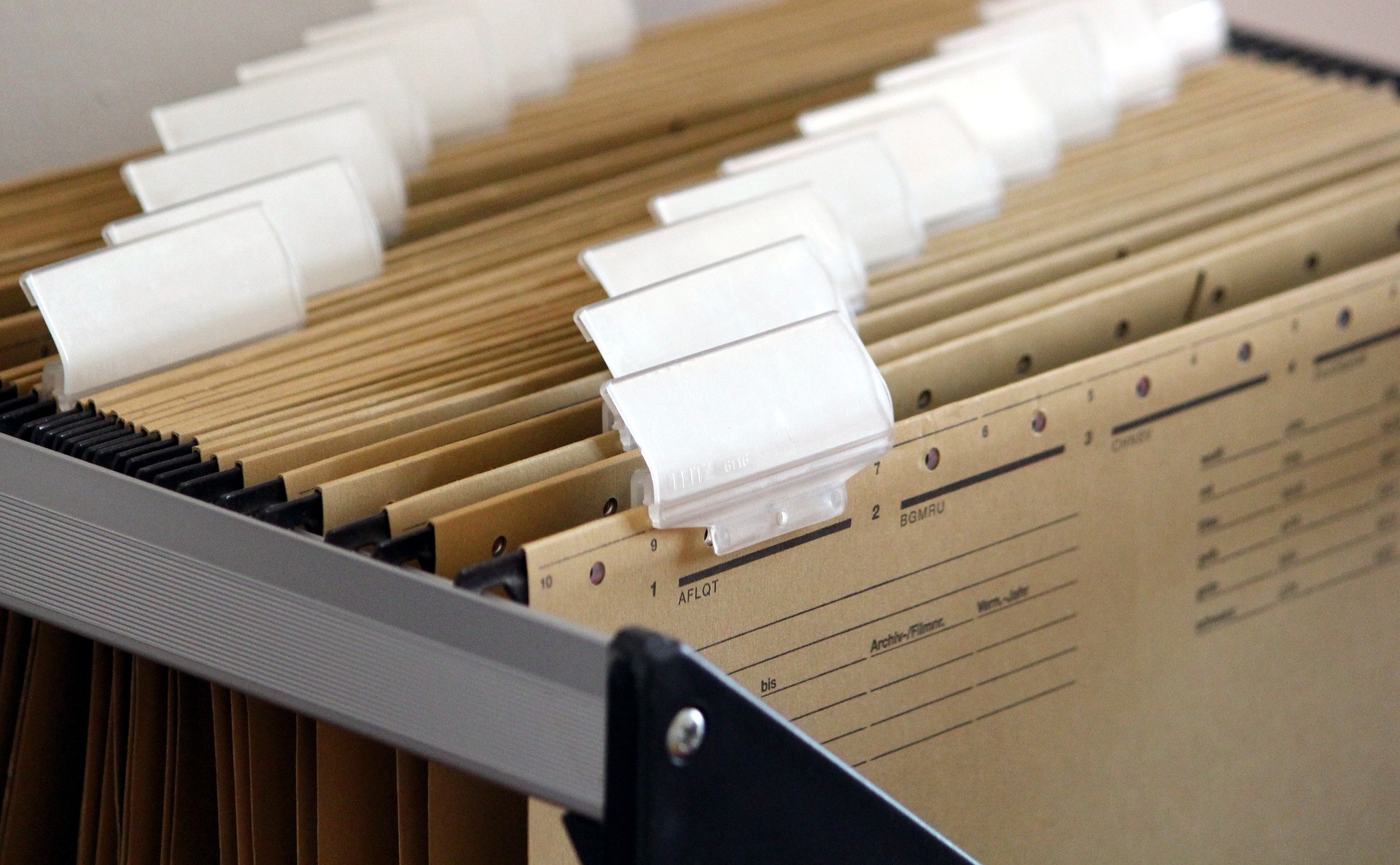
There are a number of personal finance documents we should keep handy in a secure location for future reference. Both you and your partner should be aware of the location of these documents so neither party ever needs to spend countless hours searching, or worse, not being able to locate the document at all.
1) Pay stubs:
If you receive pay stubs with year-to-date reporting, you should always keep your most recent pay stub as well as your final year-end pay stub. The final year-end pay stub can be a great tool for tax planning while you are awaiting T4s and it can be used to verify the T4; sometimes mistakes happen. Also, in the event your employer ceases operation, CRA will accept a tax return supported by pay stubs in the event a T4 is not issued. If your pay stubs do not include year-to-date reporting, you should consider keeping all of them. One of my first experiences with insolvency occurred while I was a teenager working part-time. The business was forced to close and I never received a T4. If I did not keep my pay stubs, I would have had no way to prove deductions to CRA and therefore would have forfeited my tax refund.
2) Notice of Assessment:
After you file your tax return, CRA will mail you a Notice of Assessment. Although you can print a copy if you have CRA “My Account”, some lenders might ask for the original mailed from CRA, so it’s a great idea to keep the original handy for future reference.
3) Investment statements:
Whether you receive monthly, quarterly, or annual statements for your investments, at the very least, you should always keep the most recent and your partner should be aware of its existence and location. Investments will ask for a beneficiary to be designated so it is important to keep information pertaining to the investment handy. Also, if you have gone through a separation or divorce, it is important to keep beneficiary information updated in the event something adverse were to happen.
4) Life Insurance policies:
Should something happen to you, it is important these policies are kept in a secure location and that your partner is aware of its existence. You do not want your loved ones potentially missing out on a benefit that you paid for to specifically benefit them in the event something happens to you. Also, if you have gone through a separation or divorce, it is important to update your beneficiary information as soon as possible.
5) Proof of final payment:
If you have ever changed service or utility providers, I strongly recommend you keep a copy of your final bill from the old provider along with proof of final payment until the end of time. I have met countless people who experienced a drop in credit score of 100 points or more because a “delinquent” debt magically appears on their credit report relating to a former service or utility provider. In most cases, the account was closed years ago and now the provider or a third-party collection agency is contacting, looking for payment and claiming final payment was never received. If this happens to you and you cannot provide proof of payment, you might have an uphill battle defending yourself and getting your credit report and credit score updated accordingly. Both Equifax and TransUnion will remove errors from your credit report but if a company claims you owe money and have not paid, without proof of payment, neither Equifax or TransUnion will simply remove it because you told them it was paid.
If you are looking for advice, or a second opinion about your debt, it doesn’t cost a thing to talk about your options. Every situation is unique and viable options for dealing with debt, besides a bankruptcy or proposal, might exist. Together, we will spend our time discussing those options, personal finance best practices, and suggestions for any gaps that might exist in your current financial plan. If we determine a bankruptcy or proposal might worthwhile options, Jaime Johnson & Associates is the only local firm where you will deal exclusively with a licensed trustee for every aspect of your file. We pride ourselves on ensuring the best quality of service is provided. There are no departments, no call centers, and no layers. Together, we will ensure you are confident in making an informed decision, and will work on putting your new financial plan into place.
For a free consultation, please call or text (506) 645-1814 or email jaime@tackledebt.ca; or visit www.tackledebt.com